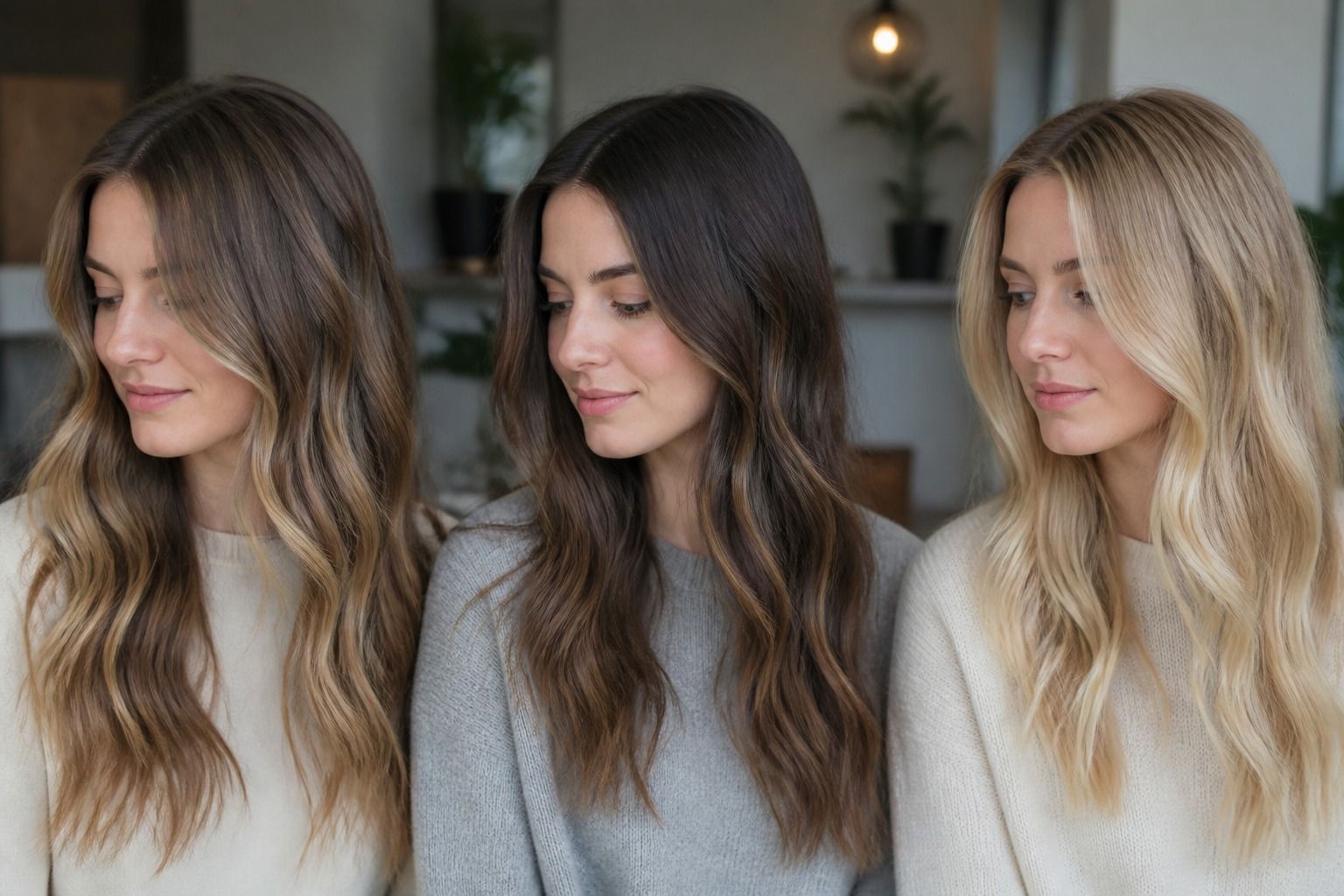
Hair color analysis is most useful when it turns a vague wish into a manageable choice. Instead of asking whether one shade is universally flattering, look at how warmth, depth, contrast, and surface color interact with your face. A photo can suggest a direction, but it cannot predict exactly how a formula will behave over old dye, porous ends, or a different natural base. The good decision is usually less dramatic than the first inspiration image: a shade that supports your coloring, suits the amount of upkeep you can tolerate, and still looks believable when you leave the salon.
What hair color analysis can actually tell you
A useful analysis compares relationships rather than handing you a single magic swatch. It asks whether your natural coloring looks clearer beside warm or cool tones, whether strong contrast gives your face definition, and whether very bright color competes with your features. The same person may suit several families of shades because depth and chroma can move while the underlying temperature stays similar. That is why a soft neutral brown, a cool beige blonde, and a muted rose brown can all work for someone who does not look good in a strong orange copper.
Hair color analysis is also a way to notice what feels wrong. A shade can look attractive on its own but make the skin appear gray, yellow, red, or uneven. Another may be technically close to your undertone but too dark around the face. Treat those reactions as clues, not as a final diagnosis. The aim is to narrow the field before you choose a technique, not to pretend that a screen can replace a consultation or a strand test.
How undertone and depth change the result
Temperature is only one part of a color decision. Warm shades contain more gold, honey, peach, or copper; cool shades lean toward ash, taupe, violet, or blue; neutral shades sit between those groups. Depth describes how light or dark the color appears, and it often has a bigger visual effect than a small shift in undertone. A medium cool brown may look balanced, while the same cool family in near-black can create much more contrast and make the overall face feel sharper.
Start by comparing the proposed shade with your roots and eyebrows, not only with your skin. If the roots are naturally light and the new color is much deeper, the grow-out line will be obvious. If the hair is already dark and the goal is a pale beige blonde, the change involves lifting, toning, and regular maintenance rather than one simple color appointment. Ask whether the intended depth is realistic for your current hair history, especially if the lengths contain permanent dye.
| What you notice | What it may suggest | How to phrase it at the salon |
|---|---|---|
| Silver, navy, berry, or charcoal makes the face look clearer | Cooler or cleaner shades may sit more calmly against the skin | Ask about ash brown, pearl beige, espresso, or a violet-based gloss without a flat finish |
| Cream, camel, olive, rust, or warm gold makes the face look healthier | Some warmth may be useful, even if you do not want obvious red or orange | Ask about honey, chestnut, caramel brunette, copper-beige, or controlled golden dimension |
| Very dark color makes the jaw and under-eyes look sharper | The depth may be too heavy, even if the temperature is close | Keep the root soft, lift one level, or place lighter pieces near the face |
| Blonde looks polished in the salon but yellow at home | Light bulbs, toner fade, or hard water may be changing the read | Discuss beige or pearl toner, a gloss schedule, and daylight checks before going lighter |
Wardrobe is part of this test, not an afterthought. If you usually wear crisp white, black, denim, and silver jewelry, a stronger or cooler shade may feel intentional. If your closet leans toward ivory, sage, oatmeal, tan leather, and soft brown, a very icy blonde or dense blue-black can make the clothes look disconnected. Hair sits beside fabric every day, so color analysis hair advice should account for the real colors you already choose.
Why eye color matters less than people expect
Eye color can make a shade feel harmonious, but it should not lead the analysis by itself. Blue eyes do not automatically require ash blonde, and brown eyes do not rule out cool or muted hair. What matters is the combined effect of the eyes, skin, natural hair, and the contrast around the face. A soft brown can echo the depth of dark eyes without becoming heavy; a cool berry brunette can bring out green or hazel flecks without looking obviously red.
Look at the skin around the eyes as well. A very bright or highly saturated hair color can emphasize shadows under the eyes, while a slightly softened shade may make the whole face look more rested. This is easiest to judge in a plain top with no strong print. Take the photo from a short distance near a window, then compare the face rather than admiring the hair alone. If the hair is the first thing you see, the color may be overpowering.
How to test a shade in natural light
Natural light gives a better starting point than a bathroom mirror under a warm ceiling bulb. Stand near a window without direct sun on your face, keep the camera at eye level, and avoid filters or automatic beauty modes. Take one image with the hair loose and another with it pulled back enough to show the hairline. The goal is not a perfect portrait; it is a consistent reference that lets you compare the same face with different shades.
Virtual try-on tools can be useful at this stage if you treat them as sketches rather than evidence. They can show whether copper feels too loud, whether a deep brunette gives welcome definition, or whether beige blonde is easier on the face than icy blonde. They cannot fully predict porosity, gray coverage, toner fade, or how a lightener will move through old pigment. Save the try-on image if it helps describe mood and placement, but pair it with a daylight photo of your current hair.
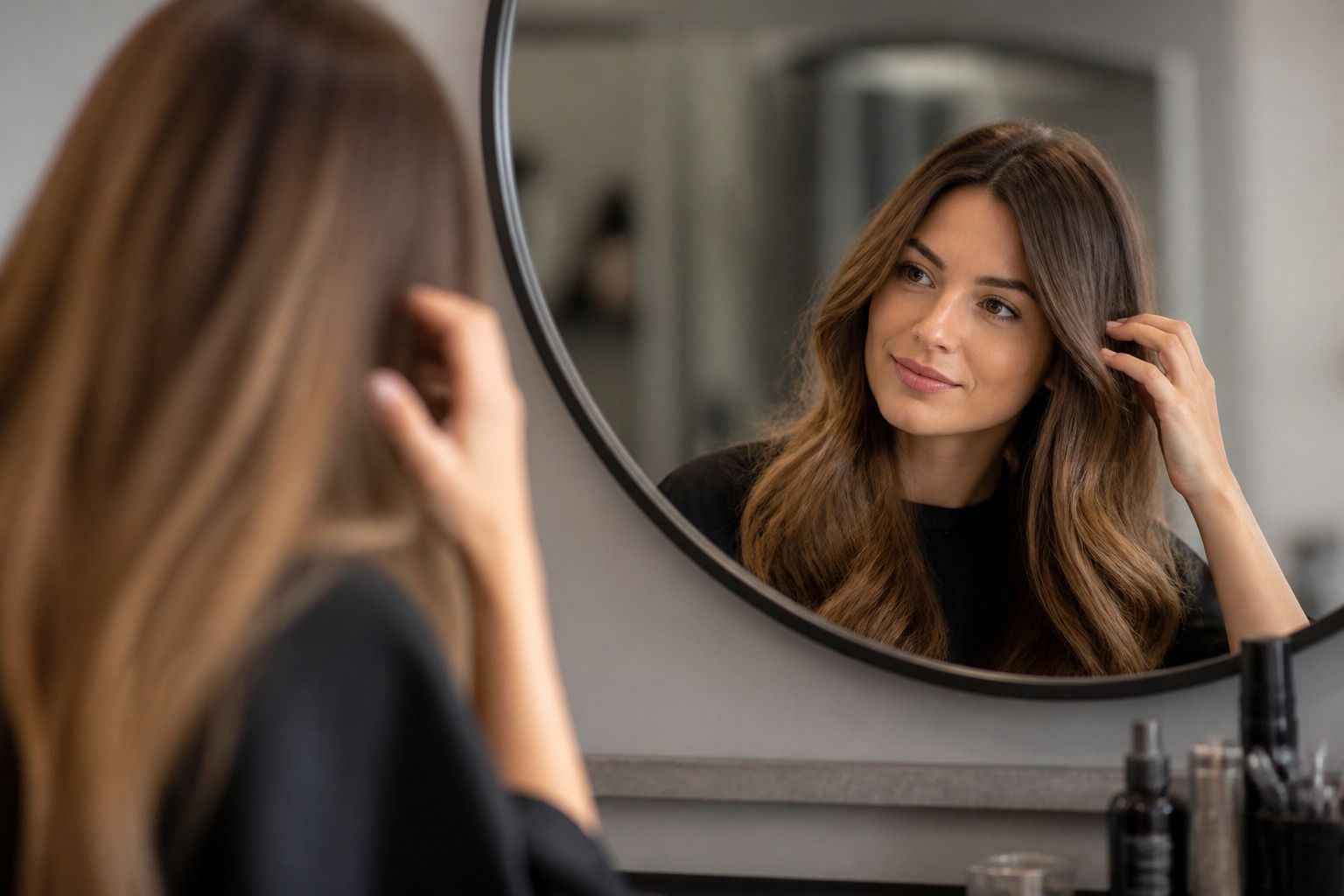
Compare each option at three distances. Up close, check whether the color brings out redness or dullness in the skin. At arm's length, check whether the face still has definition. In a full-length mirror, notice whether the hair color works with your usual clothes and jewelry. A shade that looks beautiful in a close crop may feel disconnected from your wardrobe or make your eyebrows look unexpectedly pale. That practical reaction matters more than a neat label such as cool, warm, or neutral.
Turning the result into a realistic salon plan
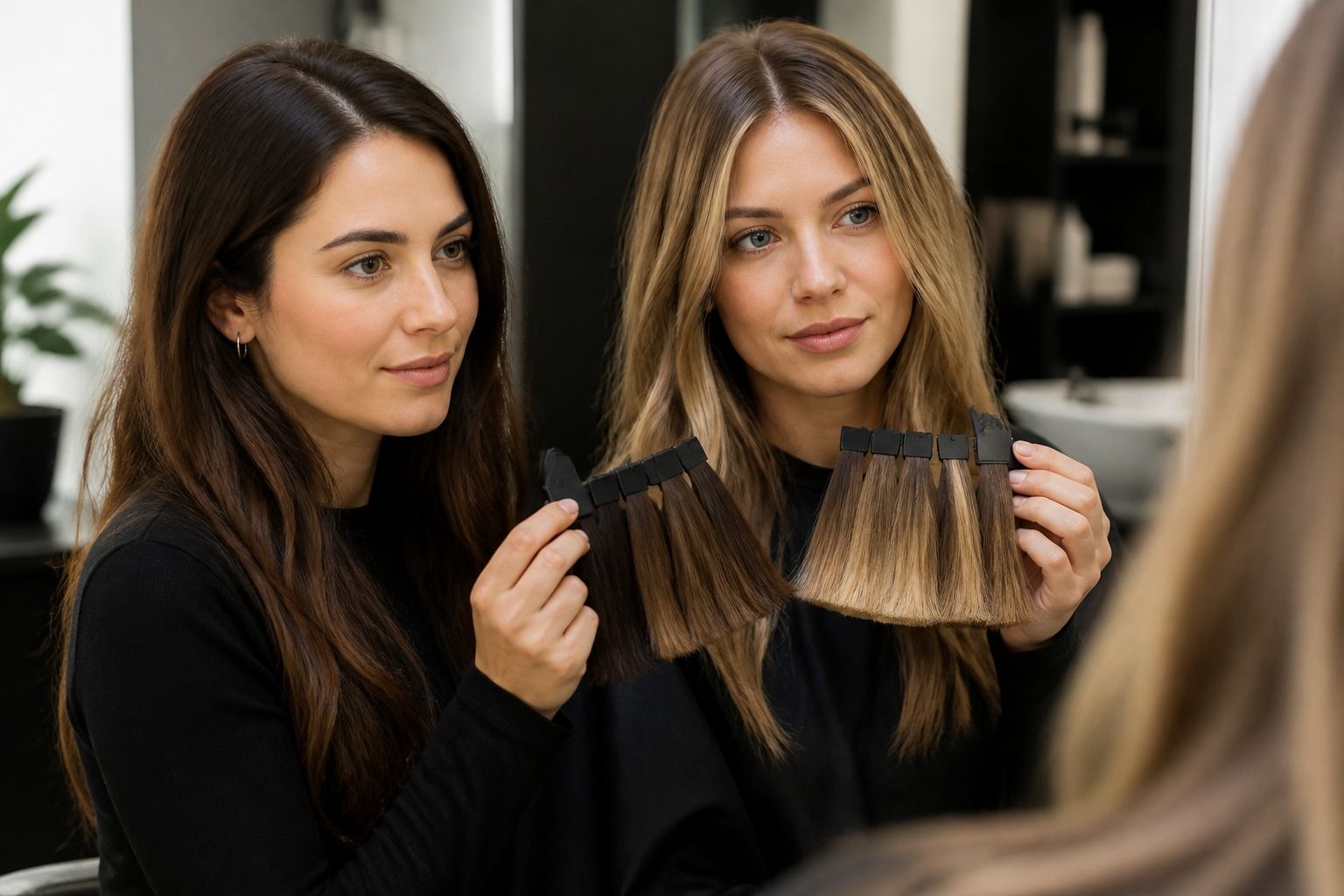
A good salon plan contains a direction and a boundary. Say that you want a muted medium brunette with a neutral-cool finish, or a beige blonde that stays soft rather than icy. Then show one or two reference images and explain what you do not want: excessive red, a solid black result, a bright stripe around the face, or a high-maintenance root line. Mention your current color, previous bleaching, box dye, and the amount of time you can spend on toning.
Ask the colorist what can be achieved in one appointment and where a strand test would be sensible. Bring daylight photos, but do not insist that the result match a screen exactly. Hair texture, porosity, and previous formulas change the way color settles. The best hair colour analysis gives you language for a conversation, while the final formula should respect the condition and history of your hair. A shade that is slightly less dramatic but grows out cleanly will often feel better six weeks later.