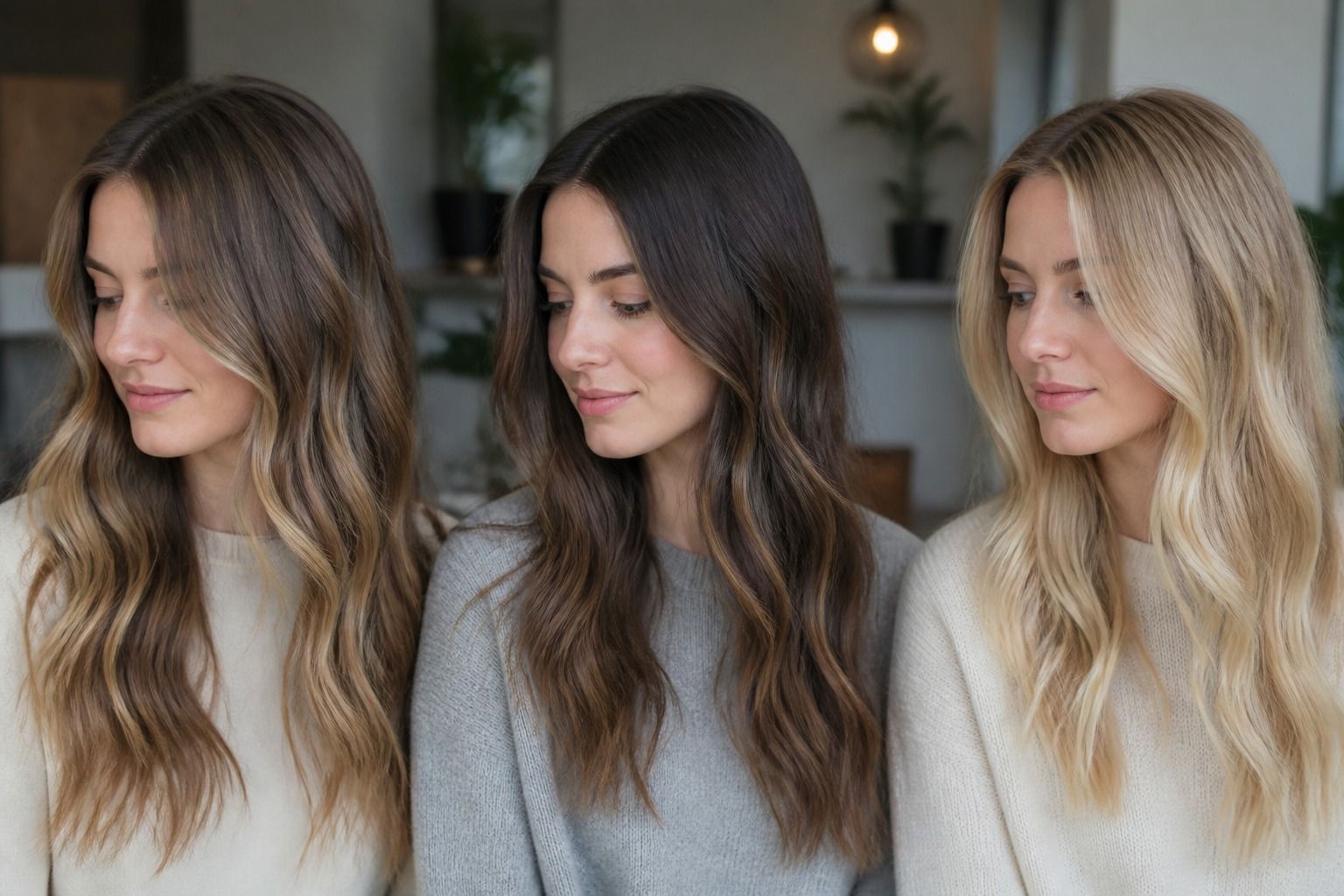
Blonde hair, blue eyes, and fair skin can look luminous in the right clothing colors, but the combination is more delicate than many color charts admit. A shade that looks refined on the hanger can turn chalky beside pale skin; another that seems too quiet in the store can make blue eyes look clearer and blonde hair more expensive. The useful question is not which season you must be, but how much softness, warmth, depth, and contrast your face can carry before the clothes start wearing you.
Why the formula is only a starting point
People often search for the best clothing colors for blonde hair, blue eyes fair skin expecting a fixed list: wear blue, avoid black, choose pastels. That list can help, but only if it is treated as a mirror check rather than a diagnosis. Blonde hair may be beige, golden, ash, champagne, honey, or almost white. Blue eyes may be icy gray-blue, denim, aqua, or deep sapphire. Fair skin may lean cool pink, neutral ivory, peach, or translucent olive. Those small shifts change how fabric behaves near the face.
The biggest trap is assuming that all light coloring needs very light clothing. A pale blue sweater can look angelic on one blonde woman and oddly flat on another. The difference is usually contrast and undertone. If your brows, lashes, and eye rim are soft, low-contrast colors often feel polished. If your eyes are vivid or your brows are darker than your hair, you may need more structure: navy, charcoal, pine, or a clearer rose instead of powdery pastels.
Fair skin also reacts strongly to white balance. Optic white can make some complexions look bright and clean, especially with cool ash blonde hair. On warmer fair skin, the same white may emphasize redness or make the hair look yellow by comparison. Cream, ivory, soft oatmeal, or shell can be kinder. The same logic applies to gray. Dove gray is gentle, charcoal is elegant, but a cold mid-gray can drain the face if it sits too close to your natural skin depth.
Test light and dark colors beside your face
A practical test is better than a perfect theory. Stand by a window in daylight, remove heavy makeup if possible, and hold fabric directly under your chin. Do not judge the color alone. Watch the skin around the mouth, the shadows under the eyes, and the edge of the jaw. A good color makes the face look rested before you have done much styling. A weak color makes you reach for bronzer, lipstick, or brighter earrings to repair the outfit.
With blonde hair and blue eyes, light colors need enough pigment to register. A misty blue shirt, a pale cornflower knit, a soft periwinkle scarf, or a gentle sea-glass green can lift the eyes without competing with them. If the fabric is too close to the skin color, the whole look may blur. That is why blush, beige, and cream are not automatically flattering. They work best when they either match your undertone beautifully or sit clearly lighter or darker than your skin.
Dark colors are not forbidden. They simply need a cleaner decision. Black can look striking if you have high contrast, very cool coloring, strong brows, or a deliberate makeup look. Without those supports, black may create a harsh frame and make fair skin look thinner. Navy is often the more forgiving dark because it echoes blue eyes while giving the outfit shape. Charcoal can do the same for ash blonde hair, especially in wool, cashmere, denim, or a soft jacket rather than shiny synthetic fabric.
Soft colors that support blonde hair
Soft color is usually where this coloring starts to look most natural. Think of shades with a little air in them: dusty rose, muted lavender, powder blue, sage, soft teal, cool mint, blue-gray, pearl, mushroom, and gentle taupe. These colors leave room for blonde hair to catch the light. They also avoid the common problem of a garment looking louder than the person wearing it.
Dusty rose is useful because it brings life to fair skin without the sugary effect of baby pink. If your skin is cool, choose a rose with a mauve or blue base. If your skin is warmer, try shell pink, peach-rose, or light coral. Blue is the safest family for many people with blue eyes, but the exact blue matters. Powder blue can be beautiful with soft ash blonde hair; denim blue looks easier and less precious; marine blue or French blue adds polish when pastels feel too sweet.
Green deserves more attention than it usually gets. Sage, eucalyptus, celadon, and soft teal can make blue eyes look clearer because they sit near blue without copying it exactly. Yellow is trickier. Pale butter, straw, and vanilla can glow on warm blondes, while acid yellow can turn fair skin blotchy. If yellow makes the face look tired, move it away from the neckline and use it in a skirt, bag, or print instead.
| Color family | Best versions | What to check in the mirror |
|---|---|---|
| Blue | soft blue, denim, periwinkle, navy | Eyes look clearer, not smaller or shadowed. |
| Pink and rose | dusty rose, shell, cool pink, light coral | Skin looks fresh without extra redness around the cheeks. |
| Neutrals | cream, ivory, taupe, dove gray, charcoal | Hair still looks intentional rather than yellow, gray, or dull. |
| Green | sage, eucalyptus, soft teal, celadon | The color supports the eyes without making the skin look sallow. |
| Bright accents | clear raspberry, true red, cobalt, emerald | The accent sharpens the face instead of overpowering the coloring. |
When navy, charcoal, or brighter color is better
There are days when soft color looks lovely but not finished. A pale blue cardigan over a cream top may be gentle, yet the outfit can feel unfinished in a work setting, evening restaurant, or photograph. That is when depth helps. Navy trousers, a charcoal coat, a slate blazer, or a deep teal dress can anchor fair coloring without the severity of black. The face still looks light, but the outfit has architecture.
Navy is especially useful because it can be formal, casual, and face-friendly. A navy knit with blonde hair and blue eyes often creates a quiet echo: the eyes become the brightest blue in the composition. Charcoal works better when it is not too flat. A soft charcoal flannel, brushed wool, or heathered knit has more movement than a hard gray suit fabric. If charcoal makes the skin look gray, try blue-gray, pewter, or navy instead.
Brighter colors work best when they are chosen with intention. Cobalt can be stunning if the eyes are clear and the hair is cool or neutral. Raspberry can wake up fair skin more gracefully than orange-red. Emerald can look crisp with pale skin, but a yellow green may pull out sallowness. True red is not off limits; it simply asks for balance. Keep the silhouette clean, repeat the depth with a lip tint or shoe, and avoid surrounding the face with several competing bright pieces.
The easiest mistake is using bright color as a cure for a weak palette. If every outfit seems to need a loud scarf to look alive, your base colors may be too beige, too gray, or too close to your skin depth. A better solution is often a clearer neutral: cream instead of oatmeal, navy instead of black, taupe instead of camel, or blue-gray instead of plain gray.
Neutrals, metals, and prints that do not wash you out
For fair skin and blonde hair, neutrals do a lot of the daily work. The most reliable wardrobe usually starts with a few face-friendly basics: ivory or cream tops, soft white shirts, light denim, taupe knitwear, navy layers, and one darker neutral such as charcoal, espresso, or deep blue. Camel can be elegant on warm blondes, but it can also make cool fair skin look tired. If camel disappoints you, try stone, mushroom, greige, or a cooler taupe.
Jewelry metal is a useful clue, though not a final verdict. Silver, white gold, and platinum often suit cool fair skin and ashier blonde hair. Soft gold, champagne, and pale bronze can flatter golden blonde or peachy skin. Many blondes with blue eyes sit between the two and look best in brushed or mixed metals rather than very yellow gold or icy chrome. The test is simple: the metal should make the skin look smoother, not redder.
Prints should respect your natural contrast. If your coloring is soft, choose prints with blended edges, medium spacing, and colors that repeat your palette: blue, cream, rose, sage, taupe. Tiny high-contrast black-and-white prints can look busy near pale features. If your brows and lashes are darker, you can handle a sharper stripe, navy-and-white pattern, or floral with a darker ground. Keep one color in the print connected to your eyes, hair, or best neutral so the pattern feels intentional.
Build a small wardrobe palette without rigid rules
A useful palette does not need twenty perfect swatches. Start with three neutrals, three flattering colors, and two accents. For many people with blonde hair, blue eyes, and fair skin, that might mean ivory, navy, and taupe as neutrals; soft blue, dusty rose, and sage as everyday color; then raspberry and cobalt as accents. Someone warmer might swap dusty rose for peach-rose, taupe for oatmeal, and cobalt for clear turquoise. Someone cooler might choose dove gray, charcoal, periwinkle, mauve, and blue-red.
The wardrobe becomes easier when each color has a job. Cream brightens the face. Navy sharpens the outline. Taupe softens denim and blonde hair. Soft blue repeats the eyes without looking theatrical. Rose brings blood back to fair skin. Sage adds variety when blue feels too predictable. A bright accent belongs in places where you want attention: lipstick, earrings, a silk scarf, a shoe, or a clean knit under a jacket.
Seasonal labels can still be helpful, but they should not become a cage. Light Summer, Light Spring, Soft Summer, and Clear Spring can all describe parts of this coloring, depending on undertone and contrast. The mirror matters more than the name. If a color makes your eyes look brighter, your skin calmer, and your hair intentional, keep it. If a recommended shade makes you look tired, release it without guilt. The best clothing colors are not the ones that flatter blonde hair in theory; they are the ones that let your face arrive first.