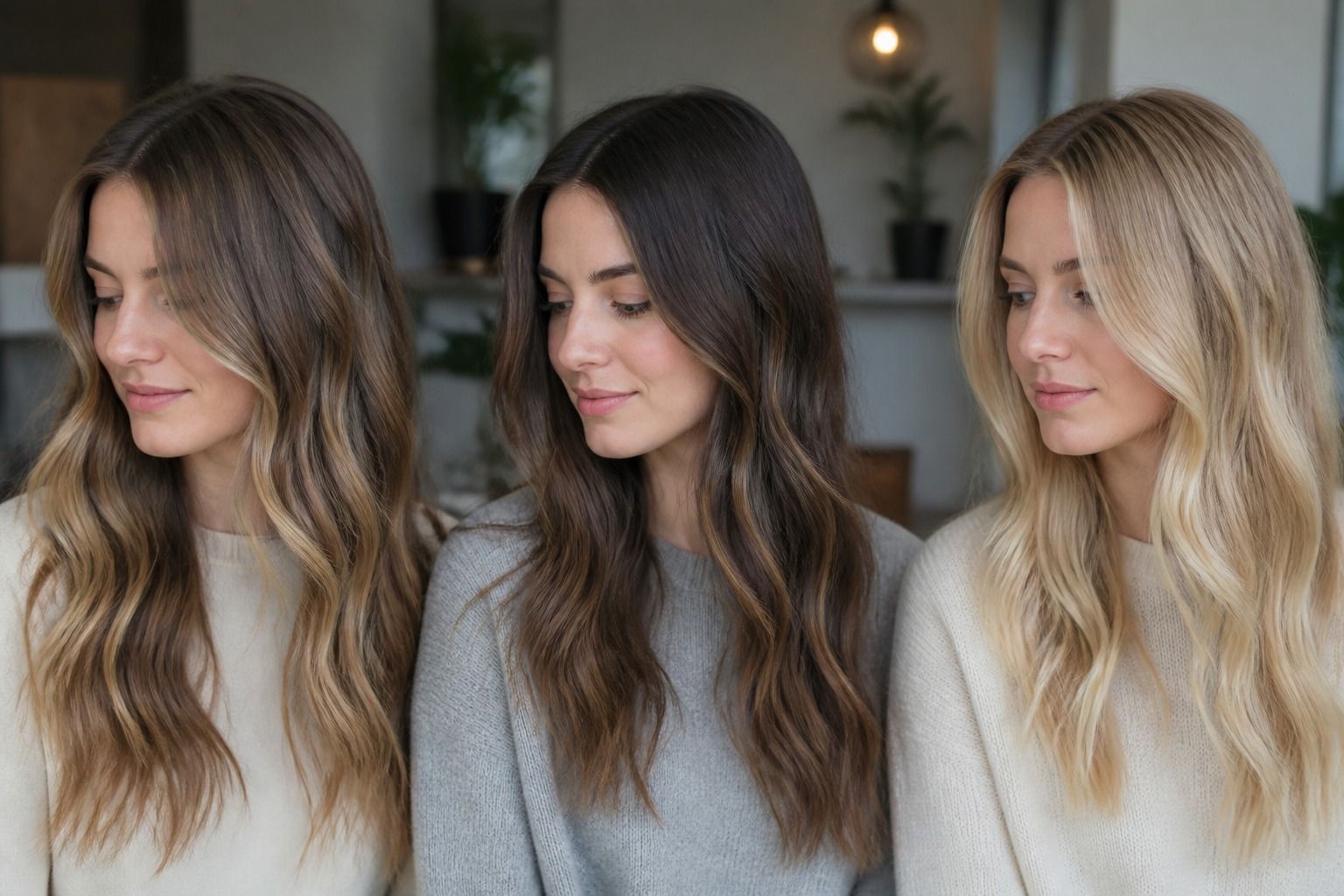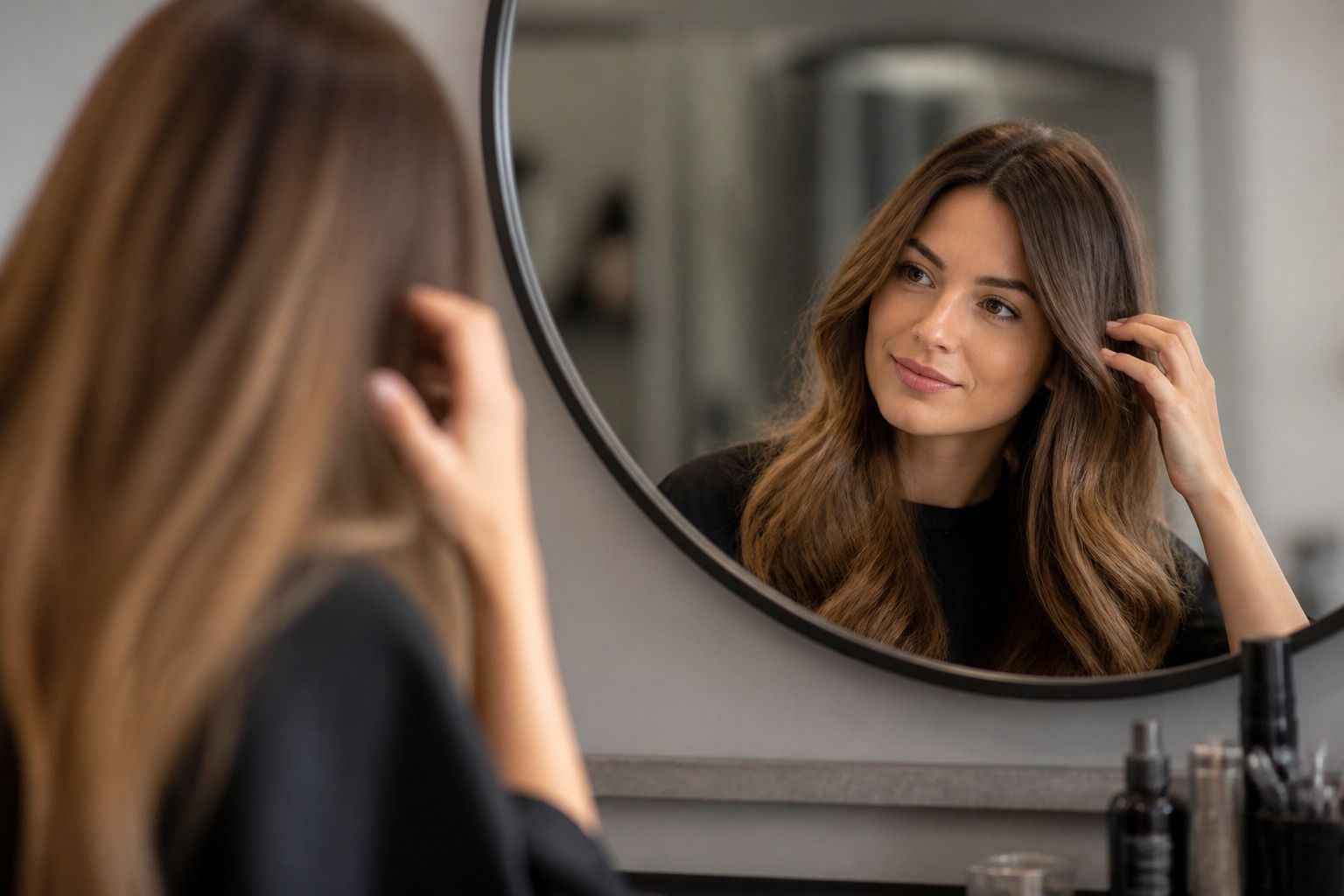
Cool Winter hair colors work best when they keep the face crisp rather than softened: clear depth, a cool undertone, and enough contrast to make the eyes, brows, and skin look intentional. The goal is not to look darker for the sake of drama or paler for the sake of trend. It is to choose a shade that behaves well in daylight, bathroom light, and the slightly unforgiving mirror beside a salon chair.
What high contrast means in a real hair decision
For a Cool Winter palette, high contrast usually means there is a visible difference between skin, eyes, brows, and hair. A person with bright eyes, defined brows, and naturally dark lashes may look more settled in true black, cool espresso, or a sharp brunette than in a soft beige brown. The same face can look tired when the hair is muted, even if the color is technically expensive and beautifully blended.
The practical check is simple: pull the hair away from the face and look at the features first. If the brows and eyes still ask for definition, the hair color should probably answer with clean depth or clean brightness, not with a smoky in-between shade. Warm caramel, honey brown, and golden balayage can be flattering on other seasons, but on a Cool Winter they often blur the edge between hair and skin. That blur is the problem, not the beauty of the color itself.
Cool does not always mean blue-black. It can be deep mushroom brunette, cool dark chocolate, a controlled violet-burgundy, or icy pieces placed where they sharpen the face. What matters is the temperature and clarity. A shade that looks elegant under neutral salon lighting can turn orange under sun or muddy under office LEDs, so the decision should be tested against the light you actually live in.
Dark shades that look deliberate instead of heavy
Dark hair is the most natural starting point for many Cool Winter looks because it supports contrast without asking the face to fight for attention. True black, soft black, blue-black, and cool espresso can all work, but they do different jobs. True black gives a clean graphic frame. Blue-black adds an ink-like reflect that can look striking on cool undertones. Cool espresso is quieter and often easier if the current hair is medium brown and the client does not want a severe shift.
The risk with dark color is flatness. A single dense shade from roots to ends can look polished on healthy hair and harsh on dry ends. A colorist may keep the root deep, then use a slightly softer cool brunette through the mid-lengths so the hair moves. That is not the same as adding warm highlights. It is more like making black fabric readable by giving it texture.
| Shade direction | Best use | Watch for |
|---|---|---|
| True black | Maximum contrast with a clean, classic frame | Can expose dryness and make pale regrowth obvious |
| Blue-black | Cool shine on dark hair with a bolder finish | The blue cast may look theatrical if the formula is too strong |
| Cool espresso | Depth without the severity of black | Needs ash or neutral control so it does not drift warm |
| Deep cool brunette | A softer option for naturally brown hair | Too much beige can dull the Winter contrast |
If you are deciding between two dark shades, compare them beside the face rather than against the ends of the hair. Ends are often faded, porous, or sun-warmed, so they make a cooler formula look more dramatic than it will feel once the whole head is balanced. The better question is whether the shade sharpens the eye color and brow line without making the skin look grey.
When icy blonde gives brightness instead of softness
Icy blonde can belong in a Cool Winter palette, but it has to be treated as a high-maintenance contrast choice, not as a casual brightening trick. Platinum, pearl, silver beige, and white-blonde pieces work only when the finish stays cool and clean. If the blonde slips into butter, sand, or peach, the color starts speaking a different seasonal language.
The most wearable route is often not a full scalp blonde. Icy face-framing pieces, a cool money piece, or narrow highlights through dark hair can create brightness while keeping root contrast intact. This matters because the dark root is doing useful work. It holds the Winter structure, makes the eyes look clearer, and prevents the blonde from washing the face into one pale surface.
Bleach maintenance is the honest caveat. Cool blonde needs toning, bond care, and patience with the lift. Hair that starts very dark may reveal orange and yellow stages before it reaches a clean icy result, and pushing past those stages too aggressively can leave the color impressive for two weeks and fragile for months. A good plan includes strand testing, realistic sessions, and a toner schedule, not just a saved photo of a frosted celebrity bob.
If you want the icy effect with less risk, ask for brightness where it changes the face most: near the part, around the cheekbones, or through the top layer where light naturally lands. Hidden panels and chunky ribbons can also look modern on a Cool Winter because the contrast feels purposeful. Soft beige babylights, by contrast, often create cost without enough payoff.
How red and berry tones fit a cool direction
Red is where Cool Winter hair colors can go wrong quickly. Copper, cinnamon, auburn, and warm mahogany may look rich in a swatch book, but they usually introduce warmth that competes with a cool undertone. The safer direction is blue-based: burgundy, black cherry, merlot, mulberry, or a restrained berry brown. These shades keep the drama while avoiding the orange glow that can make the skin look uneven.
Berry tones are also useful when black feels too predictable. A deep burgundy glaze over dark brunette can catch light without turning the whole look red. Black cherry can be beautiful on naturally dark hair because it reads almost neutral indoors, then shows a cool wine reflection outside. That subtle shift is often more sophisticated than a visible purple-red from root to tip.
The caveat is fading. Red molecules are famously impatient, and berry shades can wash down to a warmer brown if the base was not controlled. Before committing, decide whether you like the faded version too. If the answer is no, plan for color-safe washing, cooler gloss refreshes, and fewer heat-styling days. A berry shade that needs constant correction may be less practical than a cool espresso with occasional shine gloss.
Root contrast, highlights, and placement
For Cool Winter, placement can matter as much as the shade. A warm balayage that melts softly from dark root to caramel end can be technically excellent and still feel wrong because it lowers contrast near the face. A sharper root shadow, cooler ribbons, or a clean brunette frame usually does more for the palette. The hair should not look striped, but it should have enough edge to support the features.
Root contrast is especially helpful for anyone moving lighter. Keeping the base cool and deep gives the grow-out a deliberate shape. It also buys time between appointments because the eye reads the dark root as part of the design, not just delayed maintenance. This is why an icy highlight can look better with a visible dark base than with a softened beige root melt.
Face framing deserves a careful conversation. A bright piece too close to the hairline can be stunning if the skin is clear and the tone is truly icy. If the blonde is slightly yellow, that same placement becomes impossible to ignore. For a lower-risk version, keep the brightest pieces a little finer and let the darker base sit closest to the brows and lashes.
Maintenance choices that keep the color balanced
The best Cool Winter shade is the one you can maintain in its cool state. Dark color may need glossing to stay reflective rather than flat. Icy blonde needs toning before it turns creamy. Burgundy needs refreshes before it fades into brown-red. None of this has to be dramatic, but it should be planned before the first appointment.
At home, the most useful habits are simple: protect the tone from heat, avoid over-washing, and use products chosen for the current color rather than for a fantasy version of the hair. Purple shampoo can help some blondes, blue shampoo can help some brunettes, and color-depositing masks can support berry shades, but more pigment is not automatically better. Too much corrective product can make the hair look smoky, dull, or uneven.
Bring three kinds of reference to a colorist: one shade you love, one shade that is too warm, and one shade that is too flat. That small comparison often communicates more than a folder of perfect images. It tells the stylist where the line is for your face. For Cool Winter, that line is usually the difference between clear and muted, cool and golden, deliberate contrast and accidental heaviness.
If you are unsure, start with the change that preserves structure: a cooler brunette gloss, a deeper root, a few icy pieces, or a berry glaze over existing dark hair. Cool Winter color does not need to shout. It needs to keep the face awake, the undertone calm, and the contrast clean enough that the whole look feels chosen.