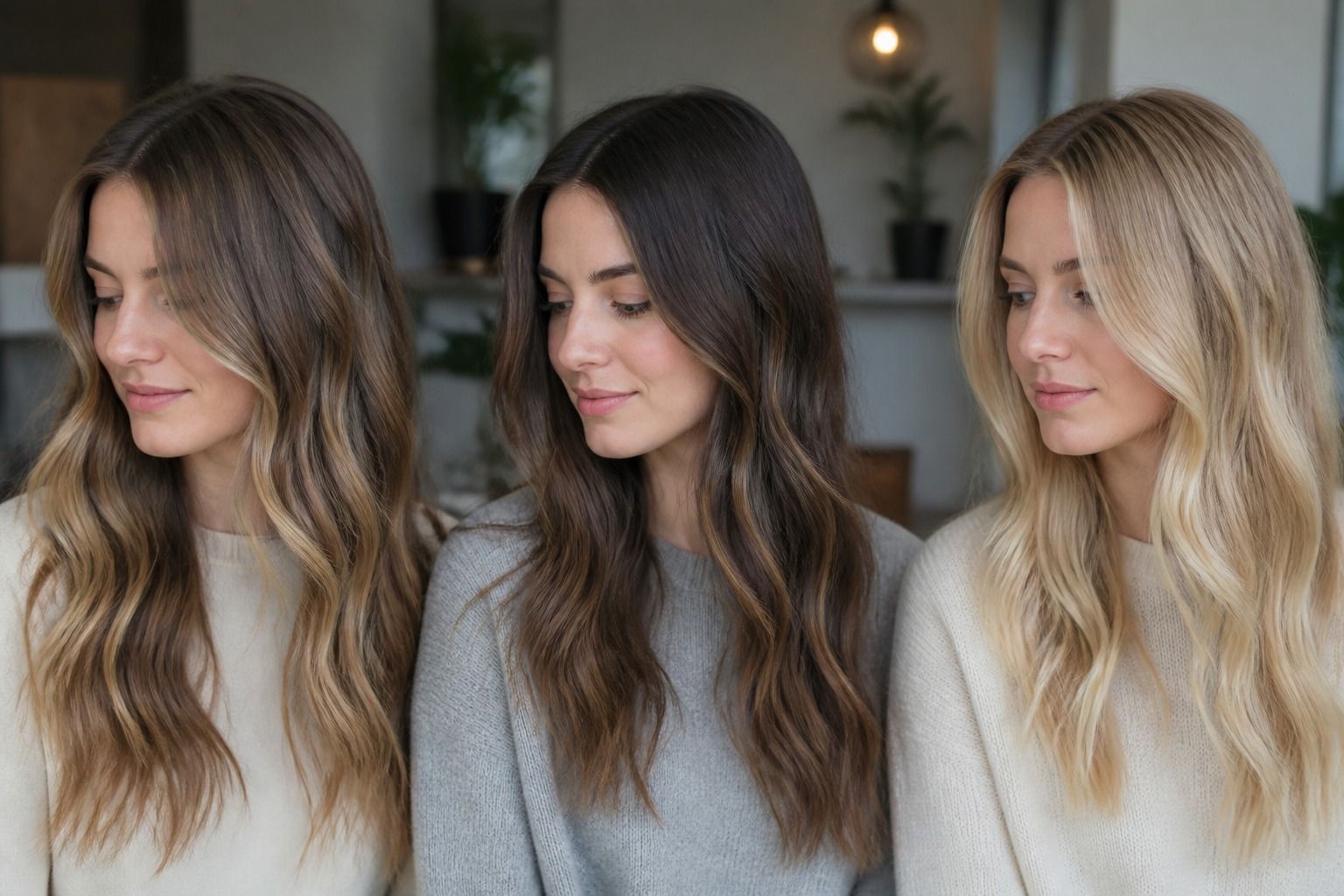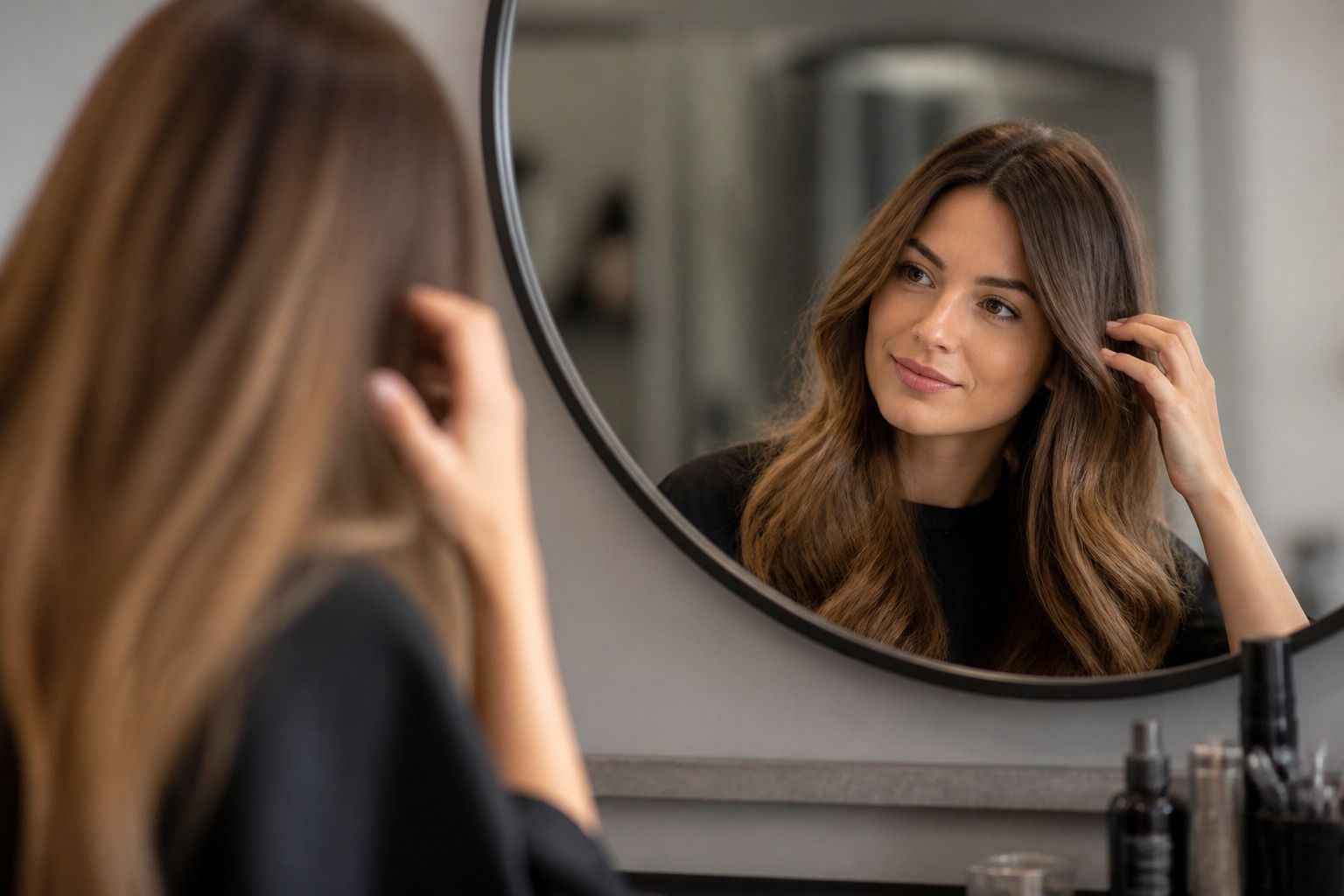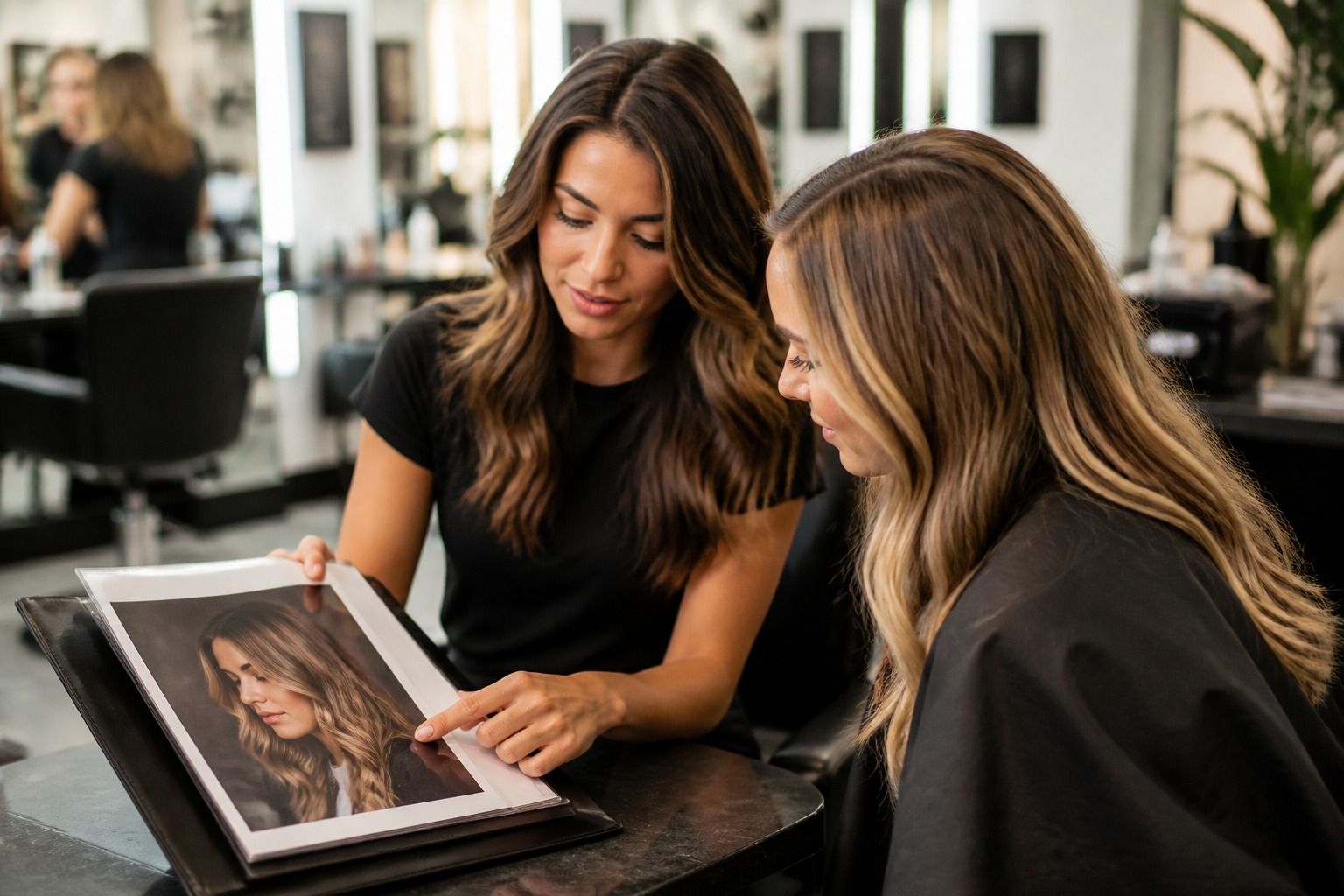
A color analysis before a hair appointment is useful only if it becomes salon language. A palette card can tell you that muted rose brown is kinder than orange copper, or that beige blonde feels softer than icy platinum, but the colorist still has to work with your current base, old pigment, gray pattern, porosity, budget, and tolerance for visible roots. The goal is not to arrive with a verdict. The goal is to arrive with notes clear enough that the consultation moves from “make me brighter” to a real discussion about depth, warmth, contrast, placement, and what your hair can safely do in one sitting.
Start with the decision the colorist actually has to make
Most people bring a reference photo and hope it explains everything. It rarely does. A colorist has to decide whether to darken, lift, gloss, neutralize, add dimension, cover gray, soften a hairline, or rebuild a previous color that has faded unevenly. Those are different jobs. Before you open your camera roll in the salon chair, write one sentence that names the decision: “I want a softer brunette that does not turn red,” “I want to go lighter without a harsh root line,” or “I need gray coverage that still looks dimensional.”
This is where color analysis hair notes become practical. If your palette suggests soft contrast, the decision may be less about becoming blonde and more about reducing a heavy dark frame around the face. If your best colors are clean, cool, and high contrast, the issue may be keeping warmth controlled rather than adding caramel pieces because they looked pretty on someone else. A palette is not a formula, but it can give the appointment a boundary.
I like to separate desire from diagnosis. Desire is the mood: polished, expensive brunette, sunlit beige, softer grow-out, brighter face framing. Diagnosis is what currently blocks it: orange mid-lengths, dark permanent dye, dull ends, warm gray roots, or a level of contrast that makes the skin look tired. Good notes include both, because the prettiest reference photo is useless if it ignores the work sitting in your hair already.
Bring palette observations, not a stack of seasonal labels
If you know your season, bring it lightly. “Soft Summer” or “Deep Winter” can be helpful shorthand, but it is not enough to guide a bowl of color. The colorist needs observations they can translate: do you look clearer in charcoal than camel, better in ivory than optic white, flatter in orange lipstick than berry, calmer in brushed silver than yellow gold? Those small comparisons say more than a label printed on a chart.
Choose three pieces of evidence that feel repeatable in real life. A daylight selfie in your most flattering top is better than a filtered party photo. A photo where your current hair looks too yellow beside your skin is useful. So is a reference image where you love the depth but not the warmth. The strongest plan often sounds almost plain: “I like medium depth, I need the warmth controlled, and I do not want the face-framing pieces to be brighter than my skin can handle.”
Do not bring twelve celebrity photos with different lighting, extensions, and professional makeup. Pick one image for depth, one for tone, and one for placement if you need dimension around the face. Then say what you are borrowing from each. A salon consultation gets much easier when the colorist knows you like the softness of one photo, the coolness of another, and the low-maintenance root of a third.
Translate warmth, depth, and contrast into plain salon language
Beauty language gets slippery around hair color. “Ashy” can mean elegant taupe to one person and flat gray to another. “Warm” can mean honey, beige, caramel, copper, chestnut, or a brass band you never wanted. “Natural” can mean low-maintenance, or it can mean the exact level you had at sixteen. Use physical descriptions instead: softer at the root, not orange in daylight, one level lighter around the face, brunette but not black, blonde but not white.
| Palette note | What it means in the chair | Phrase to use with your colorist |
|---|---|---|
| Warm colors make my skin look yellow | Gold, copper, or caramel may need restraint, especially near the face | “Can we keep the front pieces neutral-beige or cool beige rather than golden?” |
| Very dark hair makes me look sharp or tired | The depth may be too heavy even if the undertone is correct | “I want definition, but not a solid dark frame. Could we soften the base or add quiet dimension?” |
| Bright color overpowers my features | High chroma shades may need muting with beige, brown, or violet balance | “I like the idea of red or copper, but I need it muted rather than vivid.” |
| My best clothes are cool and clean | Orange fade, yellow blonde, or muddy warmth may feel disconnected | “Please help me avoid brassiness and check the tone in daylight before we finish.” |
Depth deserves special attention because it changes the face faster than undertone does. A cool brown that is two levels too dark can look harsher than a slightly warmer brown at the right level. A blonde that is technically flattering can still wash out brows and lashes if the contrast drops too far. Ask your colorist to talk in levels, not just shade names. “Medium brunette with neutral-cool gloss” is clearer than “expensive brunette.” “Beige blonde with a shadow root” is clearer than “bright but natural.”
Contrast is the part people often feel before they can explain it. If your features need softness, ask for blurred placement, a softened root, and face framing that does not create a stripe. If your features need definition, ask how to keep the hair from becoming too flat or dusty. The best hair color analysis does not choose between warm and cool in isolation; it asks how the shade behaves against your skin, eyebrows, eyes, and clothes at the same time.
Hair history matters more than a perfect reference image
A reference photo shows a destination. Hair history shows the road. Tell the colorist what has been on your hair in the past two years: box dye, gloss, toner, bleach, henna, keratin services, color removers, or a dark formula pulled through the ends. If you are not sure, say that too. A colorist can work with imperfect information better than with a confident story that leaves out permanent brown under the ends.
This is especially important if your color analysis points toward a lighter or cooler result. Cool beige blonde, mushroom brown, soft ash brunette, and pearl glosses all need a clean enough canvas. Old warm pigment may push back. Porous ends may grab tone too dark. Gray roots may need a different formula from the mid-lengths. The salon mirror only shows the present; the strand test tells a more honest story about what will happen when lightener or color touches the hair.
If the appointment involves a major change, ask where the risk sits. Is the risk condition, uneven lift, warmth, gray coverage, banding, or maintenance? A cautious answer is not a bad sign. It usually means the colorist is seeing the same reality you will have to live with after the blow-dry. A slightly slower plan can be more beautiful than a dramatic first appointment that leaves the hair dry, striped, or constantly in need of toning.
Decide the maintenance budget before the color is mixed
Maintenance is not just money. It is time, attention, shampoo habits, heat styling, how often you can sit in a salon, and how much grow-out you can tolerate in the mirror. A cool blonde may suit your palette beautifully and still be a poor choice if you dislike purple shampoo, toner appointments, and careful heat protection. A dimensional brunette may feel easier, but only if the placement grows out softly and the ends do not fade orange.
Talk about gray coverage early. Full coverage, gray blending, lowlights, gloss, and face-framing brightness age differently over six weeks. If you have a visible gray pattern at the temples, a dramatic dark base can create a hard regrowth line. If your goal is softness, the colorist may suggest blending rather than opaque coverage, or a root formula that does not look severe by week four. That is not a compromise in style; it is planning for the version of the color you will actually see most often.
Grow-out preference should be part of the plan. Some clients enjoy a crisp salon-fresh result and book regularly. Others want a color that still looks intentional after school runs, gym showers, travel, hard water, and two missed appointments. Neither preference is more sophisticated. The mistake is pretending you are the first type when your life clearly belongs to the second. A color that respects your maintenance budget will usually look more expensive than a demanding shade you resent by the next month.
Agree on the final plan before anything is mixed
Before the color is mixed, ask the colorist to say the plan back in simple terms. Listen for depth, tone, placement, gray strategy, and what is realistic today. A strong final plan might be: “We are keeping you a medium neutral-cool brunette, softening the dark ends, adding fine face-framing brightness without gold, and planning a gloss in eight weeks.” That sentence gives you more protection than a vague promise that the result will be flattering.
Also agree on what will not happen. No obvious copper. No solid black ends. No icy blonde if the lift exposes too much warmth. No chunky front pieces. No formula pulled through fragile lengths unless the hair can take it. Boundaries are not negative; they are how a palette becomes useful in a real appointment. They help the colorist protect the parts of your coloring you already understand.
The best salon plan leaves room for professional judgment without losing your eye. Bring the palette observations, daylight photos, hair history, maintenance limits, and two or three carefully chosen references. Then let the colorist translate them into chemistry, placement, timing, and condition. Color analysis before a hair appointment should make the conversation calmer, not more rigid. If you leave with a shade that works in daylight, grows out in a way you can live with, and still feels like you after the first wash, the plan did its job.